
For Churches
A Practical Way to Serve Your Community—Even When Systems Fail
Churches have always been vital during disruption in the Susquehanna Valley. When roads flood, power fails, or cell service drops, people turn to familiar places — and the people they trust there. Your church already serves as a gathering point for worship, care, and coordination. Reliable local communication simply makes that role more effective when it matters most.
This isn’t about turning your congregation into radio operators. It’s about adding a simple, independent layer of communication that works when everything else doesn’t.
Why Churches Are Critical in Local Disasters
- You’re already a hub. Many churches open as shelters, distribution points, or meeting places during storms and outages. Knowing who can reach whom — quickly and clearly — reduces chaos.
- You serve vulnerable people. Elderly members, families with young children, and those without strong neighborhood ties often look to the church first.
- You mobilize volunteers. Deacons, small groups, and ministry teams can check on people faster when they’re not relying solely on congested phones.
- You reduce strain on emergency services. Accurate, local updates from the field help everyone make better decisions.
Real events in our area (1936 flood, Agnes in ’72, 1996, Lee in 2011) showed how quickly normal communication breaks down. Churches that could reach their people and coordinate internally made a quiet but real difference.
Practical Ways Churches Can Participate
Keep it simple and human. Start small. Grow only as it makes sense.
- Equip key leaders and teams with basic handheld GMRS radios for check-ins during services, events, or storms.
- Maintain a church base station so staff or volunteers can stay in contact even when cell networks are down.
- Create simple communication protocols — who calls whom, on which channel, at what times — so everyone knows the plan without confusion.
- Include radio communication in your existing emergency or continuity plan. It takes very little extra effort once the basics are in place.
- Encourage interested families in your congregation to get their own GMRS license and radios. One family license covers the whole household.
No one needs to become a hobbyist. Most churches start with 4–8 radios and a couple of people who know how to use them.
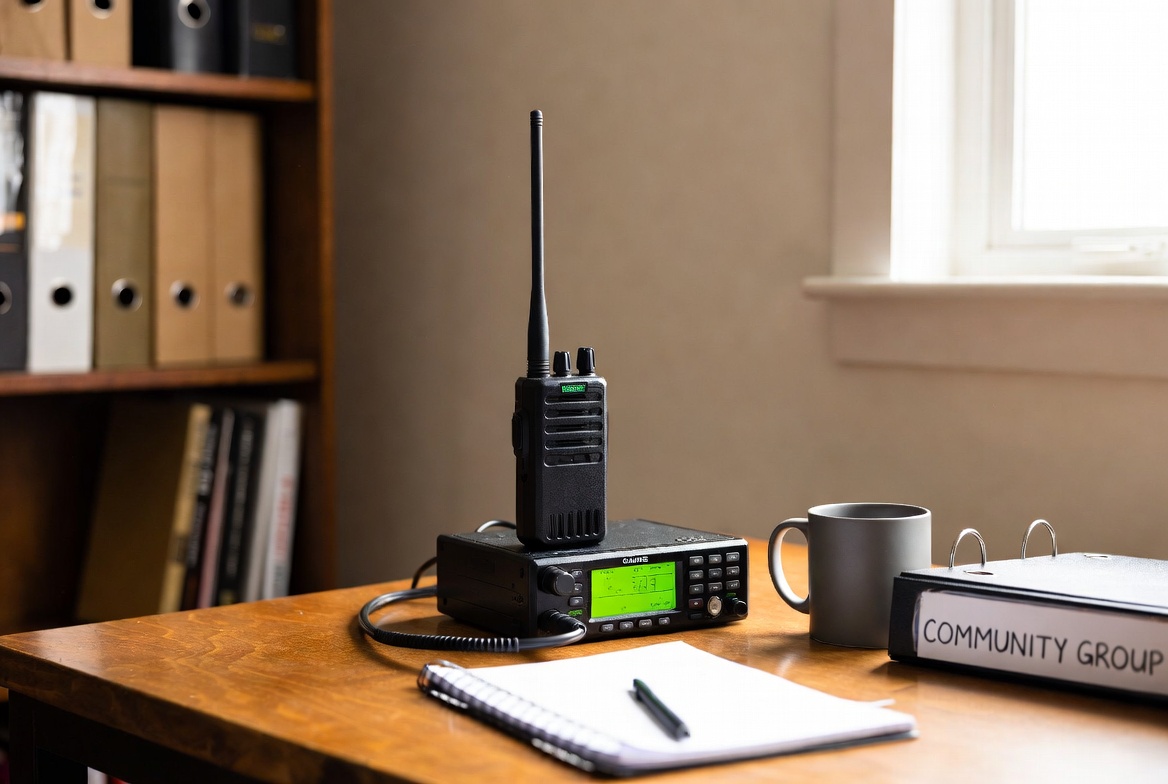
Recommended Setups
Focus on what actually works locally:
- Handhelds for teams/volunteers — Compact, easy to carry. Good for checking on members or moving between locations.
- Base station at the church — A stronger radio with an outdoor antenna for better reach across neighborhoods or across the river.
- Vehicle mobile unit — Useful for pastors, deacons, or response teams who need to stay connected while driving.
We’ll provide clear, photo-guided recommendations on the Learn GMRS section so you’re not guessing what to buy. The emphasis is always on reliable local coverage first, not maximum range or fancy features.
How This Supports Your Existing Mission
Keep it simple and human. Start small. Grow only as it makes sense.
- Equip key leaders and teams with basic handheld GMRS radios for check-ins during services, events, or storms.
- Maintain a church base station so staff or volunteers can stay in contact even when cell networks are down.
- Create simple communication protocols — who calls whom, on which channel, at what times — so everyone knows the plan without confusion.
- Include radio communication in your existing emergency or continuity plan. It takes very little extra effort once the basics are in place.
- Encourage interested families in your congregation to get their own GMRS license and radios. One family license covers the whole household.
No one needs to become a hobbyist. Most churches start with 4–8 radios and a couple of people who know how to use them.
Download the Church Communication Checklist
Other Community Anchors
Churches are not the only groups that become critical during disruptions. Food banks, senior centers, volunteer fire companies, small nonprofits, and similar organizations often step up as hubs for aid and coordination.
The same GMRS approach works for any of these groups. The tools, licensing, and basic practices are identical. If your organization serves the community in practical ways, this capability can strengthen what you already do.
Download the Community Organization Quick-Start Guide
We’re Here to Help
You don’t have to figure this out alone.
- Local experienced operators are available to provide guidance and hands-on help with setup.
- We can walk your team through licensing, choosing equipment, and creating simple protocols.
- No pressure, no sales pitch — just practical support tailored to your church’s size and needs.
If your church is interested, reach out through the contact form. Tell us a little about your situation and we’ll connect you with the right people.
Real talk: Not every church or organization will do this. That’s fine. The ones that do will be noticeably more prepared when the next flood or prolonged outage hits. Your people will feel the difference.
This is about being the kind of neighbor and community anchor people remember when things get hard — not because you had the most radios, but because you could actually reach each other when it counted.